


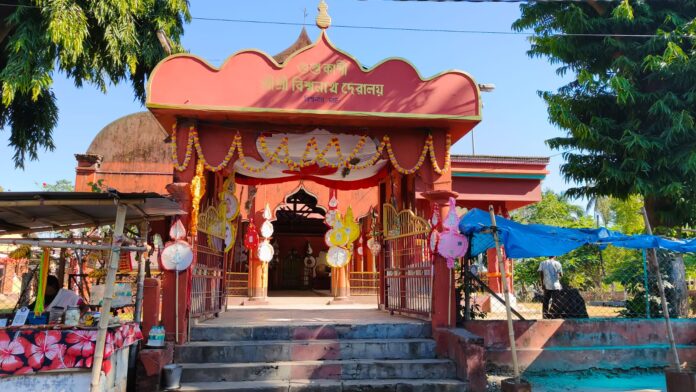

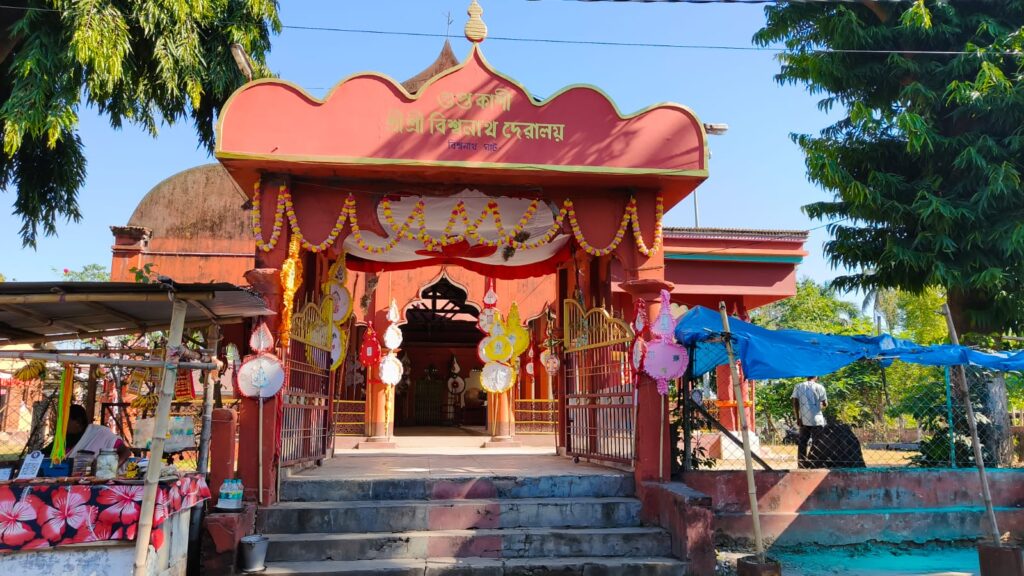
Date : 29/12/2025
Address: Viswanth Ghat(Assam)
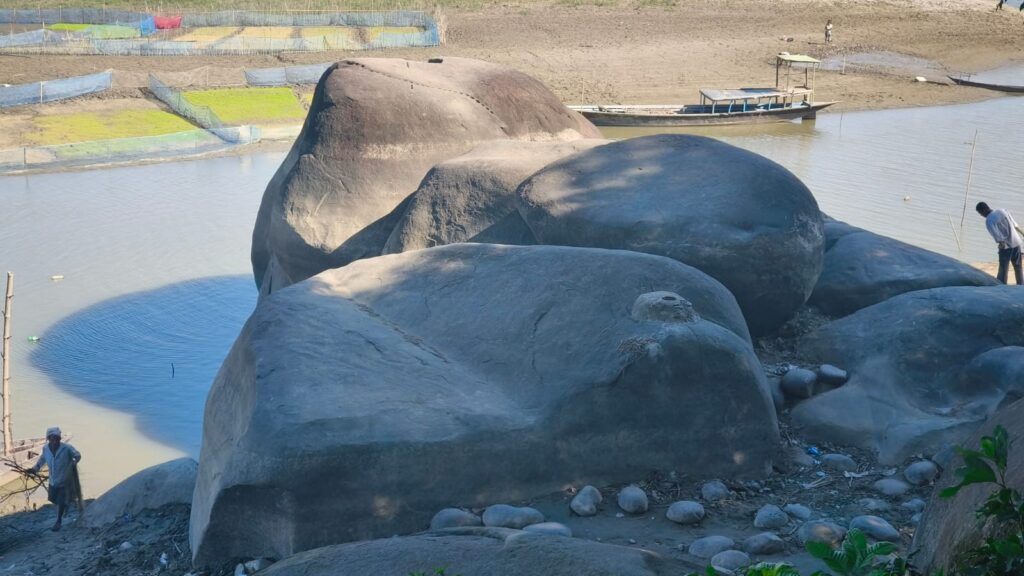
Vishwanath. Vishwanath means the Lord of the world, the master of the world. This Vishwanath is the abode of the master of the world. Varanasi, the abode of ‘Vishwanath’ is called Kashi, hence this Vishwanath, the abode of Vishwanath, is also Kashi. But this Vishwanath is called ‘Guptkashi’. The meaning of Guptkashi is that it is not known by the name of Kashi. According to the legend, Vishwanath became ‘Guptkashi’ due to the curse of two sages named ‘Kumud’ and ‘Kaustubh’.In the past, Shonitpur was the kingdom of Banasura. Bali’s son, Baana, was tricked by Vishnu into sending him to the underworld. Afterward, Baana performed penance to Shiva and regained his ancestral kingdom, Shonitpur. Baana was a great devotee of Shiva. He would create a Shiva idol every day and worship it. Satisfied with his worship, Mahadeva appeared to the king one night in a dream, saying, “I reside in your kingdom as self-manifested Kashi. Ask two sages named Kumud and Kaustubh, who are meditating on the banks of the Brahmaputra, to determine my location and worship me.” The next afternoon, the king walked across the sand to the sages meditating on the banks of the Brahmaputra and, asking “Kutrakashi” ( where is Kashi), inquired about the location of Vishwanath. The two sages were engrossed in meditation.Therefore, they did not listen to the king’s question and Therefore, he didn’t reply. Tired of walking on the hot sand in the midday sun, the king, despite asking twice, didn’t receive an answer from the sage. He angrily shouted “Kutrakashi!”, breaking the two sages’ meditation. The sages, enraged by the disruption, immediately uttered “Gupta Kashi.” These words, uttered indirectly, were used as a pretext.Vishwanath was cursed by this. Suddenly being cursed in this manner, Shiva appeared there and addressing the two sages said that Brahmins, forgetting your natural qualities of calmness, self-control, mercy and forgiveness, you have cursed me without any reason. Your hearts are devoid of mercy and illusion, ‘like stone’. These words from Mahadev’s mouth also indirectly became a curse on both the sages and immediately both of them started turning into stones. Then both the sages praised Mahadev immensely and said – ‘O Lord, destiny is inevitable. We both had to be cursed like this. Now tell us how to get rid of the curse.’Mahadev said, “At the end of Kaliyuga, there will be the Sapta -Shleshar war in the north-east corner, east of the Dikrong river. In that war, the dead soldiers, horses,There will be a war. You will be liberated when the blood of the soldiers, horses and elephants killed in that war flows through the Brahmaputra and touches your body. When you are liberated and bathe me with the water from your kamandalu, then I will be free from the curse.” The sage again asked, “When will Kaliyuga end?” Mahadev said, “Fruits will grow on trees at odd times, jackals will cross the Brahmaputra, humans will have no discrimination. There will be discrimination about food and sex till the end, but in the end even that will not remain.Only then will the Kali Yuga end. Until then, I will remain hidden. You will come from near me; you will not recognize me. Only a true devotee will be able to find me.” Saying this, Mahadev disappeared.Due to the curse of Kumud and Kaustubha, Vishwanath remained in “Guptkashi,” and due to the curse of Mahadev, both sages still remain in stone on the banks of the Brahmaputra near Shilaghat . These two large stones are known as the “Doimuni Shila.”Rai Bahadur Anand Chandra Agarwala Dev has written in his essay ‘Asmar Purabritta’, “Chyavan had two mental sons named Kumud and Kaustubh. Due to mocking the question of King Bana, he got fame as ‘Doimuni Shila’ due to the wrath of Shiva.”According to another legend, Vishwanath Purnakashi was the abode of one crore Shivalingas. However, fearing that having two Kashis on Earth would increase the number of souls seeking salvation and ultimately lead to the end of the universe, the gods stole a Shivalinga from the Vishwanath area and threw it into the Brahmaputra River.He installed it on the mountain near Hathimura mountain on the other side of the river. That ‘Shiva’ is now known as ‘Baneshwar Shiva’. The people of the southern region give a large part of the puja offered to Vishwanath to that Shiva. On Shivratri, both the people and Thakur together celebrate the Shivratri festival in that Shiva temple. Here Vishwanath became a place of one ‘Shiva’ less than one crore and one crore Shiva. Every stone residing in Vishwanath is a Shiva. Therefore, the stones here should not be broken or moved.At the confluence of the Vriddaganga and the Brahmaputra, the Mahaprabhu Vishwanath Shivalinga is housed in a single stone sanctum. The sanctum sanctorum and the Shivalinga are in the same stone.Creation has happened. Nature’s amazing creation. It is self-existent, meaning it has come into being on its own. No one has made it. Stone is the earth’s stone.It is a part of the creation of the Vishwanath Shivalinga. With the help of Kumud and Kaustubha, Bana had only determined the location of Vishwanath.
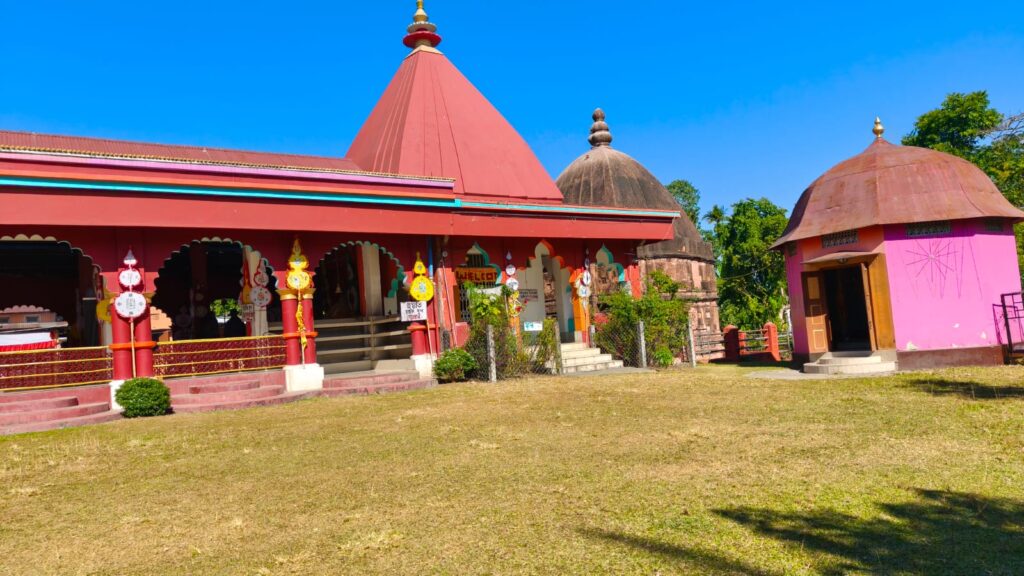
Thus, at the end of the waters of the “Vriddh Ganga,” the Budhigang River, and in the midst of the waters of the Brahmaputra (at the confluence of the Vriddh Ganga and the Brahmaputra), reside the Vishwanath Shivalinga and the Vishvadevi in the form of a yonimandal. In ancient times, Lord Vishnu, the Lord of the Universe, fought with the demon Hayagriva here, and after defeating him, he resided in Manikuta in Hajo. In the Kalika Purana, the Vriddh Ganga River, flowing from Natak Parvat (where Mahadev’s ashram is located), is described as fruitful like the Ganges, “Vriddh Gangahvaya sa tu Gangar phaldayini.” Where Bhairava Shiva is, there is Bhairava Shakti. Kamakhya Bhairava is located; a short distance away is “Umananda” Bhairava. Bhairava is located a short distance from “Mahabhairav.” From the above description, it appears that Bhairava, Bhairava, Vishvadev, and Vishvadevi reside together in Vishwanath. Rai Bahadur Anand Agarwalla Deva in his essay ‘ Kamarupar Tirtha Vivaran’ says, ‘There is no temple or house at the place where the temple of Vishwanath Shiva and Bhagwati Vishwadevi is situated at the mouth of the Budhigang River.Chanti and Rama are the Shaktis of Vishnu.Bhairava and Bhairavi are together in the temple, but there are clearly two separate adjacent kunds. However, such a clear distinction is not visible in the Vishwanath cave.
The Vishwanath Shiva Linga is submerged in water during the rainy season. It emerges in the month of Kartik. Upon the emergence of the Gosain, the sand is dug out, a house is built, and the first puja of the year begins on an auspicious day in the month of Aghon . From that day, daily pujas are performed until the Gosain Furova (turning) day of Bohag Bihu, i.e., the Gosain Bihu day on the second of Bohag. Usually, on that day, the grave (place) is filled with water. After the puja is performed in the water, the Vishwanath is lifted back to the shore in a Kenkora Dola (palanquin) dating back to the Ahom kings and taken to Bhir village, three miles away. Bhir village is the village of Vishwanath Mahaprabhu’s Thakur-Deuri (priest). The Namghar in that village is the Namghar of Vishwanath. Gosain Furova is an ancient and important festival of Vishwanath dating back to the kings. Holding the ‘Arowana’ (umbrella/shamiana) over the palanquin of the Gosain, the Thakur, Deuri and the public also celebrate with a procession and take the Gosain for a procession. Anyone who has witnessed this amazing sight once is blessed.Whoever has seen it several times is blessed. During the king’s time, when the king went out for a walk, three ‘Arowanas’ were taken. When the three ministers, Budhagosain, Bargosain, and Barpatra Gosain, went out for a walk, each one took one ‘Arowana’, and when Vishwanath Mahaprabhu went out for a walk, there was a rule to take seven ‘Arowanas’. This rule is followed even today. But nowadays, the number of Arowanas given by devotees out of respect has reached around a hundred.The Vishwanath temple on the bank is worshipped year-round. Daily pujas are also performed at the Vishwanath temple when the water is released.When the water emerges at Biswanath, daily puja is performed there as well. The worship of Biswanath is not stopped. It is believed that if the worship is stopped for any reason, it will bring misfortune to the king, subjects and the earth. Due to the presence of Biswanath both on the banks and in the water, people say – ‘Biswanath Gosain Labak-Farak, six months in water and six months on the banks.’ There are twenty-seven temples in Biswanath starting with Biswanath. One of them, ‘Budha Madhav or Budha Gosain’, is located in Pratapgarh Garden, approximately 16 km away from Biswanath. The remaining twenty-six are in Biswanath and Umatumni . Umatumni is a small island in the middle of the Brahmaputra, located near BiswanathIt is a high mound, home to a temple dedicated to the goddess Uma. Therefore, it is called Umatumani. It is here that Uma meditated and met Shiva.
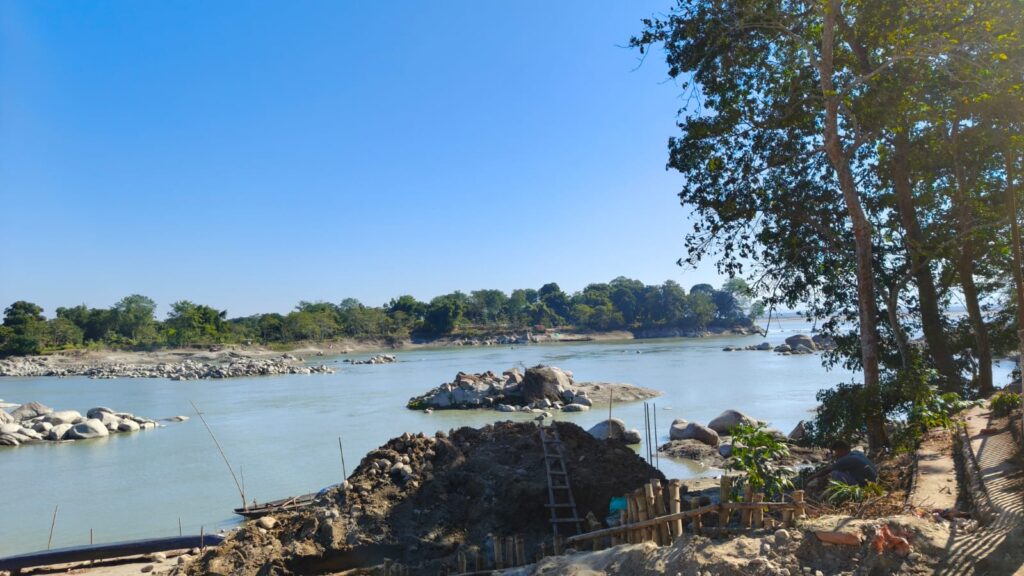
The Vishwanath Shivalinga was established at the place where Shiva appeared. Shiva’s wife Sati sacrificed her life in the Daksha Yagna and then became the wife of King Himalaya.It was established by donating a stipend, a gold and silver treasury, a gold Laghun, a pair of Makar Kundalas, people working at the temple, a Paik, a Nati, a Bill, and a copper plate to ensure that the sons and grandsons continue to worship Vishwanath for the king’s well-being. Since then, the worship and service of Vishwanath has been going on regularly.Vishwanath’s historical importance was also no less. In the essay ‘Asmar Purabrit’, Rai Bahadur Anand Chandra Agarwal Dev has written – “…The above mentioned Buranji (Buranji of Kamrup) shows that when Mounvati, the wife of Dharmapal’s younger brother Manichandra , defeated Dharmapal in the war and took control of Kamrup, Dharmapal fled with his family to Upper Assam. His son Batupal ruled in Vishwanath. His son Sompal made Kanyaka his capital. Sompal’s foster son Bhalukpeng or Pratap Singh was a very powerful king.”In his address to the welcoming committee of the sixteenth annual session of the Assam Sahitya Sabha, he wrote again: “After Sompal, his son, Bhaluk Peng or Ramchandra Kunwar, became king, taking the name Pratap Singh. He built a fort called Pratapgarh, and from that fort extended north to Dafla Mountain and south to Vishwanath Nagar. He is also known as Meenaka because of the fish symbol on his royal wheel. There is an inscription from his time at Umatumni, and inscriptions on the stone also mention Chakrabehu, Baghkhel, and others. His capital was Lohityapur, now Vishwanath Nagar. The military and feudal lords were based in Pratapgarh. That fort still connects the Mukhar-Garh of Pratapgarh Bagan to Vishwanath. Vishwanath is surrounded by forts. Umatumni also has numerous forts. These forts clearly indicate that Vishwanath was once a secure city.
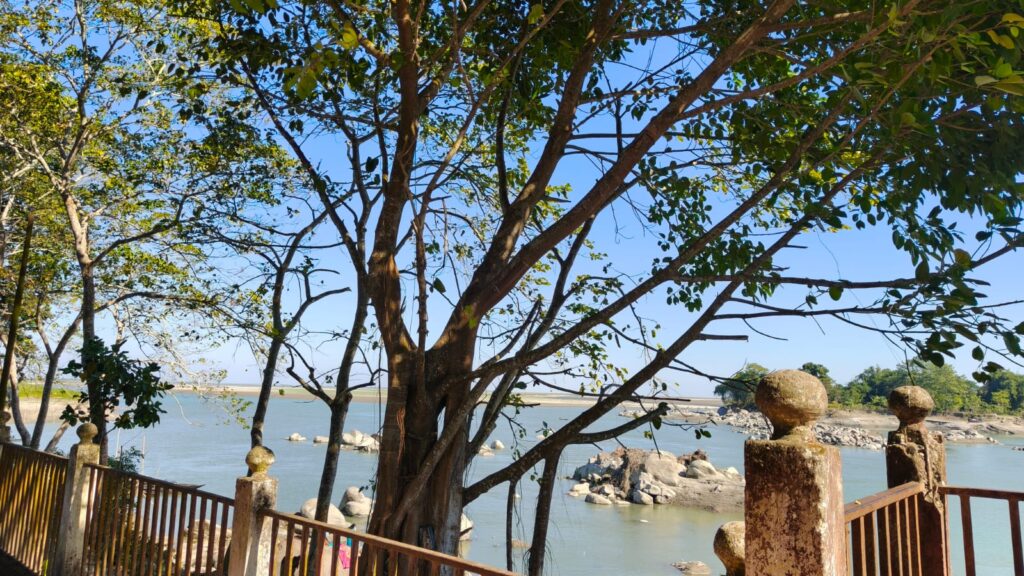
But it is a matter of great regret that this ancient city has been completely destroyed. Not only have individuals dug and leveled the iconic forts, but various government departments, instead of maintaining them, have also dug and destroyed them. (Evidence of this is evident at the entrance of Vishwanath.)